
Updated: October 27, 2026
The property never closes
Filming a hotel is unlike filming almost any other commercial location, because you cannot clear it. The rooms are sold, the restaurant is serving, the pool has people in it, and the guests paid for a stay rather than for a role as extras.
That single constraint shapes everything: the schedule, the crew size, the lighting package and the shot list. Plan around it and a property shoot runs smoothly. Ignore it and you spend the day negotiating with a duty manager.
Shoot when the property is quiet
Every hotel has a rhythm, and the operations team knows it precisely. Ask them rather than guessing.
Public areas are usually emptiest early in the morning, after the breakfast rush has ended and before the day's arrivals. Restaurants are available between services. Pools are quiet at opening. Meeting spaces are free between bookings, which the events team can tell you weeks ahead.
Guest rooms need to be blocked, meaning taken out of inventory for the day. That costs the property real revenue, so ask for the minimum number and be efficient in them. A room held for a shoot that overruns by three hours is a room that could not be sold and a relationship that is now harder.
Season matters here more than in most cities. Shooting a Miami property during peak weeks means competing with full occupancy. The same shoot in a quieter period gets far more access for the same budget, and the property will often prefer it.
Guests in the frame
You cannot film identifiable guests for commercial use without their permission, and asking a stranger on holiday to sign a release is an intrusion the hotel will not thank you for.
The practical approaches, in the order most productions use them:
- Shoot when the space is genuinely empty, which is the cleanest answer
- Cast talent to populate the space, so everyone in frame has signed
- Frame tightly on detail, architecture and staff rather than wide on public areas
- Use shallow depth of field so background figures are unrecognisable
- Place clear signage at entrances stating that filming is taking place, coordinated with the hotel
Casting is usually the right answer for hero shots. A staged couple at a bar, lit properly and directed, looks better than a real one caught accidentally, and it removes the legal question entirely. Use talent who look plausible for the property's actual clientele rather than a generic casting.
Staff appearing on camera need releases too, and their employer needs to have agreed to it. That is a conversation with human resources as well as with marketing, and it takes longer than people plan for.
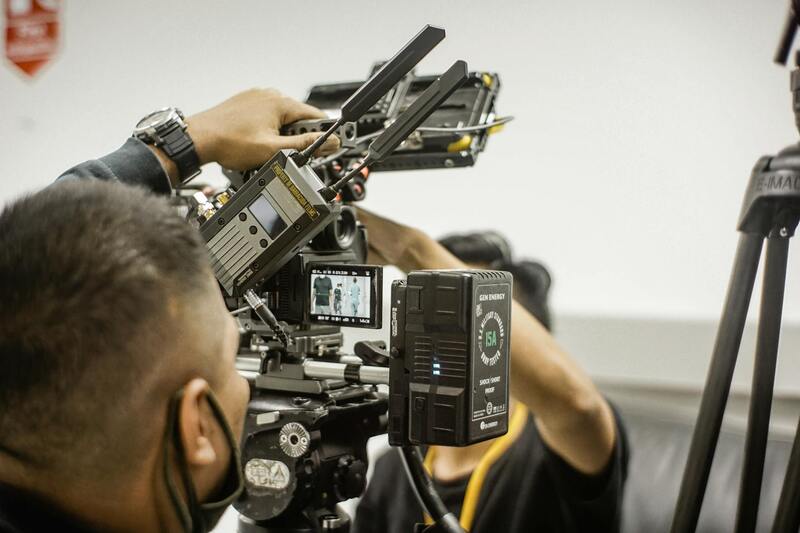
Light, and the problem with hotel interiors
Hotel interiors are lit for atmosphere rather than for cameras. Expect low levels, warm practical fixtures, mixed colour temperatures within a single room, and large areas of glass that put bright daylight next to deep shadow.
The temptation is to bring a large lighting package and take control. In an operating property that is often not possible: stands in a lobby are a hazard, cable runs across a walkway are unacceptable, and rigging time in a public space is limited.
What works better is scheduling to the daylight, using small battery-powered fixtures for fill and accent, and shooting rooms at the time of day when the windows are doing the work for you. Rooms facing the water look entirely different across a morning, and picking the hour is cheaper than lighting against the wrong one.
Balance the interior against the view rather than blowing it out. A guest room shot where the window is a white rectangle has lost the thing the property is selling. That usually means exposing for the exterior and adding light inside, or shooting closer to sunrise or sunset when the two are nearer in brightness.
What the property actually needs
Hotels commission video for several different purposes, and a single film rarely serves all of them well.
The property film sells the experience and lives on the website and in sales presentations. The room tours are functional and specific, one per category, showing what a booking actually gets. Event and meeting space content targets a completely different buyer with different questions, mostly about capacity and configuration. Social content needs vertical framing and works better as many short pieces than as one polished film.
Agree these as separate deliverables with their own shot requirements before the shoot, because they are shot differently. Trying to extract a vertical social cut from a horizontal property film produces something that satisfies nobody.
Getting the property camera-ready
Someone from the hotel should walk each location with you before the shoot day, and the list of things to fix is longer than expected: worn edges, marked walls, mismatched furniture, cables behind a desk, a dead plant, signage that has faded.
Housekeeping detail carries enormous weight in the result. Beds have to be dressed to a standard well beyond normal turnover. Towels folded, cushions placed, curtains hung evenly, nothing crooked. Allow real time for this and expect a member of the housekeeping team to be with you throughout, because they will spot things the camera crew never notices.
Check for dated material as well. A film containing a restaurant that closes next year, a lobby about to be renovated, or a uniform that is changing has a shorter useful life than the budget assumed. Ask what is planned over the next two years and shoot around anything that will not survive it.
Shooting outside and around the water
Much of what sells a Miami property sits outdoors, and the exteriors carry their own scheduling logic.
Pool areas are best at opening, before loungers are claimed and towels appear on every chair. Beachfront shots depend on the tide as well as the light, and a stretch of sand that looked generous at the recce can be half its width at high water. Check both before fixing the call time.
Building exteriors depend entirely on orientation. A facade facing east is lit in the morning and flat by afternoon; the reverse for a west-facing one. Ask which way the property faces and plan the walk-around accordingly rather than shooting it all in one block.
If drone footage is part of the brief, treat it as a separate planning exercise rather than an add-on. It needs a licensed operator, airspace awareness and permission from the property, and in a city with this much controlled airspace and this many tall buildings the answer is sometimes no. Establish that before it appears in a storyboard the client has approved.
Finally, note that outdoor furniture and umbrellas are usually branded or dated. Ask what is being replaced this year and frame accordingly, or you have shot a film with a visible expiry date.
Working with the operations team
The people who decide whether your day goes well are the duty manager, the housekeeping supervisor and the food and beverage lead. Meet them, tell them the plan, and give them a schedule with the times and places you will be in.
Be genuinely easy to move. If a guest situation needs your corner of the lobby, go without discussion and come back later. That flexibility is what gets you invited back, and hospitality work is repeat work.
We shoot hospitality properties around live operations rather than expecting them to stop, and we plan the schedule with the operations team rather than presenting one to them. Other sector work is on the blog, background is on the about page, and if you have a property to film, tell us your occupancy pattern and we will build the day around it.