
Updated: October 27, 2026
Why language schools live or die by video
An English language school in Miami recruits students who are thousands of miles away. A teenager in Bogota, a nurse in Sao Paulo or an engineer in Kyiv is choosing between your school, a dozen others in Florida and programs in Toronto, London and Sydney. They cannot drop by for a tour. Their parents, sponsors and agents want to see the classrooms, hear the teachers and picture daily life before anyone pays a deposit. For most ESL programs, video is the closest thing to a campus visit.
This guide is for directors, admissions teams and marketing staff at intensive English programs, ESL schools, university language institutes and community adult education programs in Miami-Dade and Broward. It covers what international students and agents need to see, how to film classes without making students uncomfortable, how to plan multilingual versions, and the rules that shape what a school can say about visas and outcomes.
What prospective students and agents want to see
Admissions teams at language schools hear the same questions in every inquiry, in every language. Good ESL school video answers them before the email arrives.
- Real classes. How many students sit in a room, how a lesson runs, whether the teacher actually gets everyone talking.
- The teachers. Short introductions from instructors, in clear and natural English. Students want to hear the accent they will be learning from.
- Level placement. How the placement test works and what happens if a student lands in the wrong level.
- Where students live. Homestay families, student residences and shared apartments, filmed honestly, with the commute to school.
- The neighborhood. Brickell, Downtown, Coral Gables or Miami Beach each sell a different lifestyle. Show the bus stop and the grocery store along with the beach.
- Activities and support. Weekend trips, conversation clubs, airport pickup and who to call at midnight when something goes wrong.
Education agents, who send a large share of international enrollments to many schools, have their own needs. They want a short, clean overview they can forward to families, a fact sheet in video form with program lengths and start dates, and evidence that the school looks after students well. A dedicated three-minute agent video, without heavy music and with clear on-screen text, is often the most useful asset a school produces.
Filming classes without killing the class
A camera in a room full of beginners changes the room. Students who are already nervous about speaking a new language go quiet the moment a lens points at them. The answer is planning, not a bigger crew.
Consent first, and in the student's language
Every student who might appear signs a media release. For a language school, that release should be available in the main languages of your student body, because a form a student cannot fully read is not real consent. Students under 18, common in summer junior programs, need a parent or guardian signature. Anyone who declines is seated outside the main camera angles, and we confirm the seating plan with the teacher before rolling.
A small crew and a warm-up
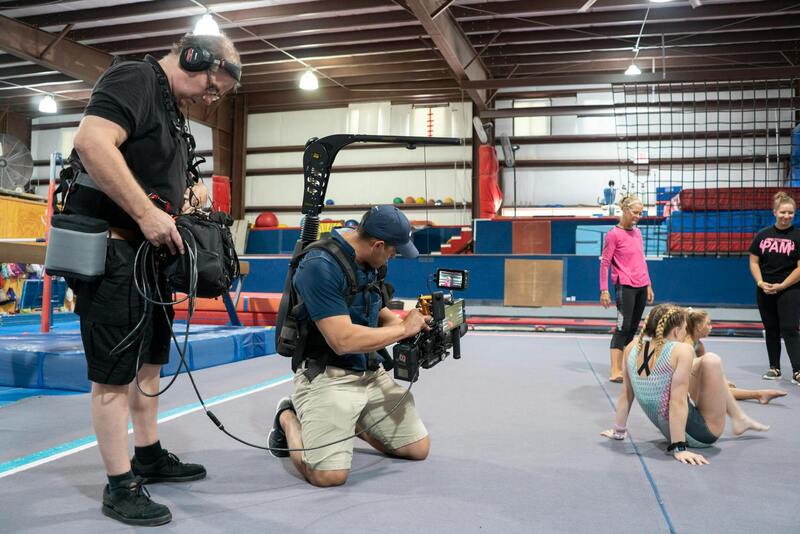
We usually send one camera operator and a producer into a classroom, with a small light that stays in one place. The teacher runs ten minutes of normal class before we start recording so students forget about us. Wireless microphones go on the teacher and, when a student agrees, on one or two speakers in a pair activity. Room audio alone rarely captures a quiet student's answer.
Choose activities that look good on screen
Pair conversations, role plays (ordering at a cafe, a job interview), presentations and games read well on camera. Grammar drills on a whiteboard do not. A short planning call with your academic director helps us pick a lesson plan that shows real teaching and real speaking.

Student stories that feel real
The most watched video on most language school channels is a student talking about their experience. These work best when the student speaks partly in English and partly in their first language, with subtitles. It shows progress, and it lets a viewer in Medellin or Osaka hear someone from home. Keep the questions open: why Miami, what surprised you, what was hard in the first two weeks, what you do on a Saturday. Avoid scripted lines about "changing my life." Viewers can hear when a student is reading.
A few practical points:
- Interview students near the end of their program, when their English is at its strongest and their memories of arrival are still fresh.
- Film a mix of nationalities, ages and program types. A 45-year-old professional on a four-week course speaks to a different buyer than an 18-year-old on a long-term academic path.
- Let students review the clip before it is published, and make it easy to request removal later.
- Get permission separately for any footage filmed at a homestay, since the host family is in the shot too.
Multilingual versions and where they run
A Miami language school might enroll students from Colombia, Brazil, Venezuela, Japan, Korea, Turkey, Italy and France in a single term. One English master with subtitles in four or five languages usually covers most of the market. Plan for it early: keep on-screen text separate from the edit so it can be swapped, leave room under the lower thirds for longer translated lines, and avoid jokes and idioms that do not translate.
Distribution shapes the cut. Agents want a horizontal master and a downloadable file. Students in Latin America and Asia find schools through Instagram, TikTok and YouTube, so vertical 30 to 60 second cuts matter. In some markets, families watch on platforms other than YouTube, so ask your agents where their clients actually look before you finalize the delivery list.
Visas, accreditation and what the video can claim
Many full-time intensive English programs enroll students on F-1 visas, which brings rules from the U.S. Department of Homeland Security's Student and Exchange Visitor Program. A recruitment video should never suggest that enrolling guarantees a visa, a work permit or a path to residency. Visa decisions belong to consular officers, and your designated school official should review any language about status, attendance or work. If the school is accredited by a recognized body, say so accurately. If it is not, do not imply it.
The same care applies to outcomes. "Students typically move up one level every eight to twelve weeks" is only fine if your own placement data supports it. "Fluent in three months" is not, for any school. Honest framing builds trust with agents, who see a lot of overclaiming and remember the schools that do it.
A sample production plan for an ESL school
| Asset | Length | Main audience |
|---|---|---|
| School overview | 2 to 3 minutes | Website, agents, families |
| Agent fact video | About 3 minutes | Education agents and partners |
| Teacher introductions | 30 to 60 seconds each | Prospective students |
| Student stories | 60 to 90 seconds each | Social media, regional campaigns |
| Housing and neighborhood | About 2 minutes | Students and parents |
| Arrival and first day | 60 to 90 seconds | Enrolled students before travel |
Most of this can be filmed in two days: one inside the school during normal classes, one on housing, the neighborhood and activities. Junior summer programs often get a separate day during the season, when the energy and the crowd are completely different.
How Miami Production Experts helps language schools
We produce education video for schools across South Florida, from college admissions and campus tours to private school enrollment films, and language schools bring their own mix of international recruiting, multilingual delivery and compliance. Before we quote, we ask about your main source markets, your agent network and who reviews visa language. On the shoot, our producer manages releases in several languages and keeps declining students out of frame. In post, we build the English master first and then deliver subtitled and vertical versions for each region.
Schools that also run online classes can reuse much of the teacher footage for virtual programs, which overlaps with our work on online course video. If you are hiring teachers as well, a short employer brand video shot on the same days costs far less than a separate production.
If you run an ESL school or intensive English program in Miami and want video that agents forward and students trust, send us a note with your program types, start dates and top recruiting countries. We will come back with a shoot plan built around the questions your admissions team answers every week.